


we live in a time of great change and great boredom
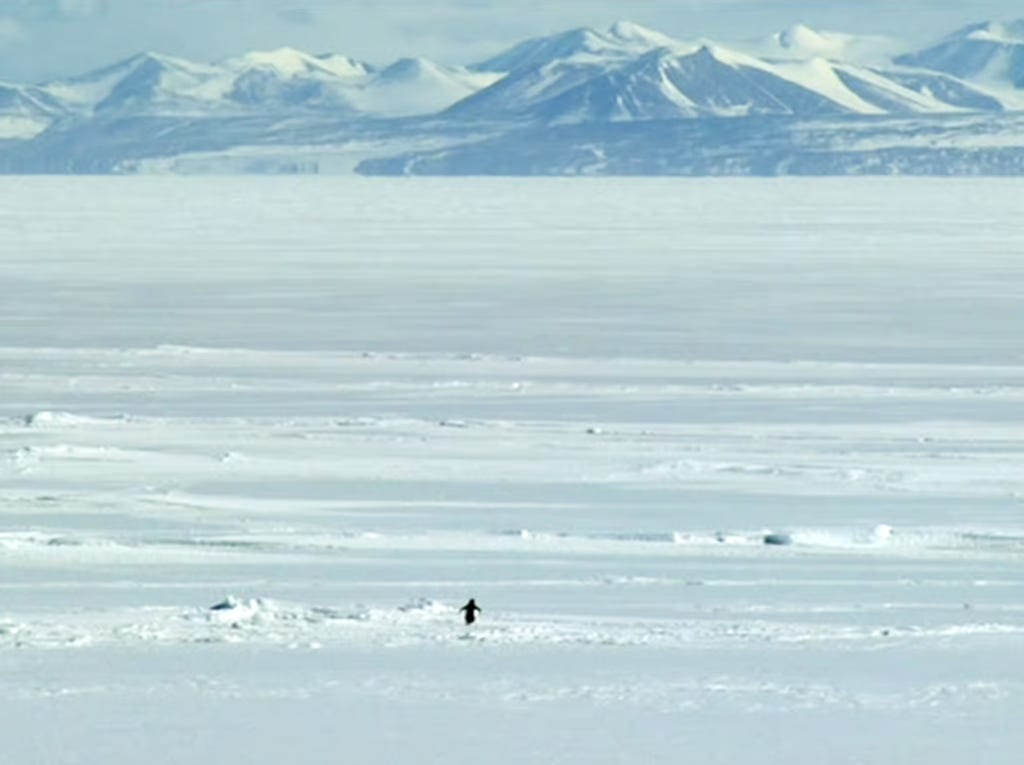
The year kicked off with a clip from Werner Herzog's 2007 documentary, Encounters at the End of the World. Visiting David Ainley, an Antarctic penguin scientist, the filmmaker observes a dissenter. Over a crashing organ rendition of Gigi D’Agostino’s "L'Amour Toujours", Herzog narrates:
But one of them caught our eye. The one in the center. He would neither go towards the feeding grounds at the edge of the ice, nor return to the colony. Shortly afterwards, we saw him heading straight towards the mountains some 70KM away. Dr. Ainley explained that even if he caught him and brought him back to the colony, he would immediately head right back for the mountains. But why?
We see an expanse of ice sweeping into the distance. A lone penguin flies (metaphorically) toward the distant peaks. As the final instrumental of the nineties Eurodance track plays, the video cuts to a Western civilization schizo-edit ending with the Hayao Miyazaki character Princess Mononoke wiping blood from her face.
The meme has been dubbed 'the nihilist penguin' although Faustian or Nietzschean may be better descriptors. The "Penguin Edit" of "L'Amour Toujours" features the Nietzsche quote, "I know of no better life purpose than to perish in attempting the great and the impossible."
The spirit of the penguin was immediately embraced by the Trump administration. The White House posted "Embrace the penguin" with a Greenlandic flag adorning the distant mountain range. The Department of Homeland Security tweeted "Americans have always known 'why'" replacing the schizo-edit at the end of video with a deportation-themed mash-up of bald eagles and ICE agents.
In the full scene, Herzog asks "Dr. Ainley, is there such a thing as insanity among penguins?" We are living in a time of great change and great boredom and at the intersection of chaotic change and mind-numbing boredom lies insanity.
the boredom
Some decades are gravity wells. Culture struggles to achieve escape velocity from their influence. Now more than halfway through the twenty-twenties, it seems unlikely we are living through one of those. The defining feature of our age is our fixation on those other decades—
The tumultuous ones, where great transformations take place: social, spiritual, technological. Or the halcyon years, when peace and prosperity reign. Baby boomers and millennials are forever in search of the sixties, when the economy was growing and the times they were a-changin'. Positioned between the too conformist fifties and the too chaotic seventies, they sat in the Goldilocks zone.
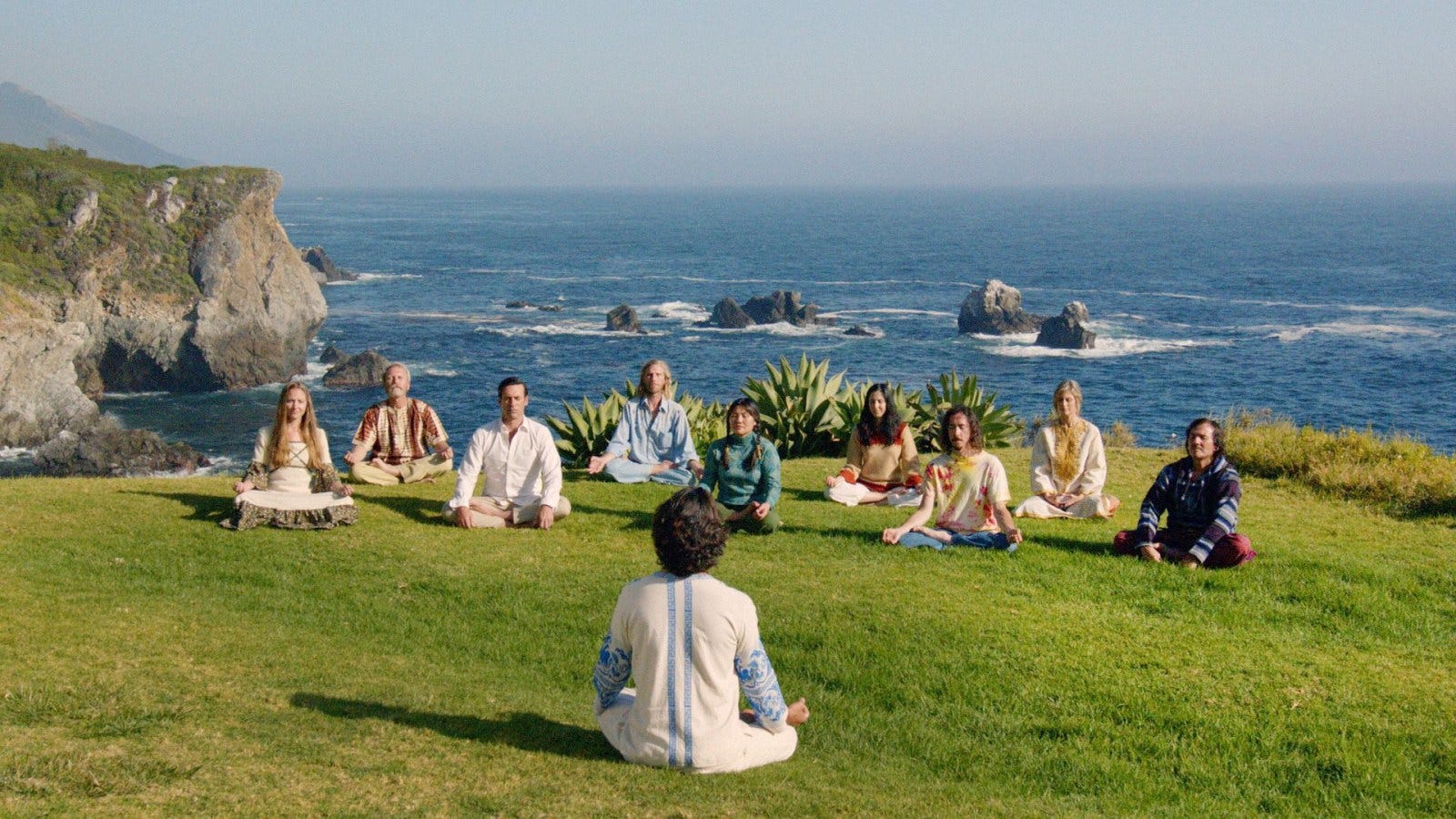
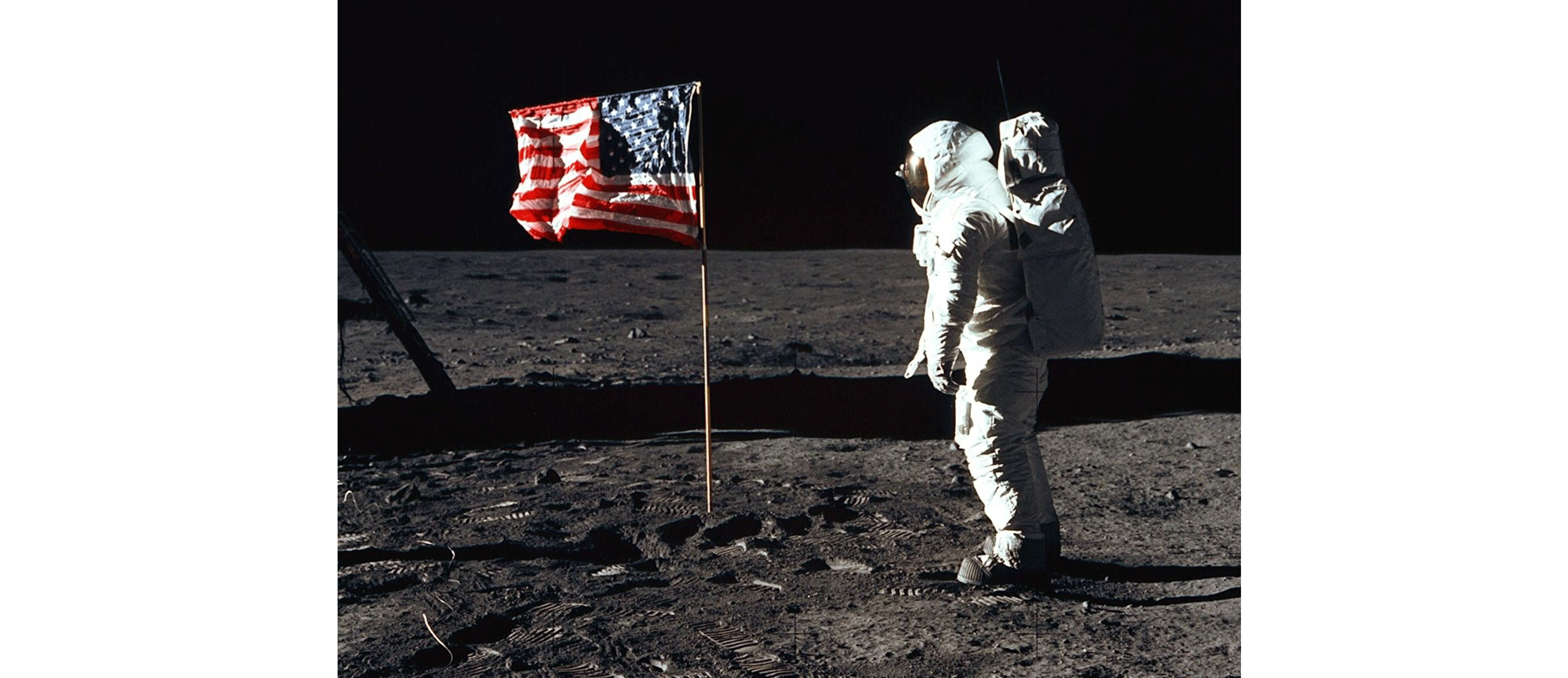
This explains the perennial appeal of Mad Men, perhaps the last great American novel. You enter the series in 1960 and exit in 1970. In the process, the world is transformed. It’s a great sweep of world events and social reform: feminism, the civil rights movement, Vietnam, the assassinations of John F. Kennedy and Martin Luther King Jr., the sexual revolution, the moon landing. And the great changes are paired with a meticulous eye for detail in set and costume design.
Sometimes I wonder if you could forge another great work out of the historical flow of the 2000's, the first decade of the new millennium. The pattern fits. The decade is hedged between the prosperous, post(cold)war nineties and the politically polarized 2010's. Each decade began with a looming apocalypse: nuclear war in the sixties and end-times anxieties in the 2000's. Each decade was punctuated by violent media spectacles: assassinations and terrorism, respectively. And the first instance of each, the assassination of JFK in 1963 and the terror attack on the World Trade Center in 2001 came to symbolize a national loss of innocence. Both had unpopular wars: Vietnam and Iraq. Both were transformed by new media technologies: television and the internet.
But then I’m unsure. Is the psycho-spiritual distance between 2000 and 2010 as far as between 1960 and 1970? The immediate answer would seem to be no. There was no equivalent to the civil rights movement, women's liberation, or the sexual revolution. Our geography wasn't transformed by the population collapse of our cities and the construction of new suburbs. The antiwar protests of the 2000's never matched the antiwar protests of the 1960's.
Apophenia is the term for our tendency to identify meaningful connections where there are none. We call it pareidolia when we see faces: the man in the moon, the Virgin Mary on a potato chip. We call it a conspiracy theory when we discover secret plans: the grassy knoll, Building 7. It's human nature to search for patterns, though taken to extremes, it's also a classic symptom of schizophrenia.
When people complain about nostalgia, this sort of navel-gazing is exactly what bothers them. We’re living on the cusp of non-human super-intelligence and this is what you are worried about? But is it any wonder that when the future is so certain, we attempt to better model the past, if only out of hope that it may provide some sort of guide.

Elites unanimously hate nostalgia because it is a symptom that something has gone wrong.
This is true across the political spectrum. For the left, it’s a rebuke of the popular Obama truism: “the arc of history is long but it bends toward justice.” The past needs to be fixed, not fetishized. A declining appetite for new culture is a precursor to a declining appetite for progressive change. Nostalgia is an alibi for reactionary politics.
For the right, especially the tech right, nostalgia is a symptom of decline. As dynamism wanes and economic growth stalls, the public becomes disenchanted with innovation. They no longer believe new technologies will improve their lives. Nostalgia is a proxy for anti-capitalist sentiment.
Or at least that’s what elites claim.
But it’s hard not to suspect that their resentment is also personal. Nostalgia implies current elites are inferior to elites of the past. The public is not buying what they’re selling. The current cultural output of artificial intelligence is thin. OpenAI and Anthropic are facing off in Super Bowl commercials like Coca-Cola and Pepsi. And while investors are excited about possibilities, the upper-middle class watches with existential dread as waves of lay-offs lap closer and closer to their door.